The US luxury market:

WHY SCALE
STILL MATTERS

US LUXURY

US LUXURY

US LUXURY

US LUXURY

US LUXURY

US LUXURY

US LUXURY

US LUXURY

US LUXURY

US LUXURY

The US remains a cornerstone of the global luxury market. Not because it is the fastest growing, nor the most experimental, but because it combines scale, depth of wealth and a uniquely resilient domestic consumer base.

In an era defined by geopolitical volatility and shifting consumer confidence, those fundamentals are asserting themselves once again.

Growth is steady rather than spectacular – a five year CAGR of 3.2% through to 2030 – but its importance lies in durability. Even as global demand oscillates, the US continues to act as luxury’s stabilising force.

It is this relative stability and market size that makes the US all the more attractive to expansive luxury brands against the current headwinds facing the global luxury market.
Valued at $143bn in 2025, the US luxury sector is projected to be more than twice the size of China’s.
Source: Savills Research

Resilience built on domestic wealth

The strength of the US luxury market is underpinned by something increasingly rare: depth of domestic demand. With almost 24 million millionaires – three times the number in China – the country has a vast pool of private wealth able to sustain spending amid external shocks
Signals from the market remain broadly positive. The Americas’ personal luxury segment is forecast to deliver stability to modest growth in 2025, and recent trading data from leading luxury groups shows continued momentum, even as other regions soften.
For global brands and landlords, this resilience matters. It reinforces the US not just as a growth market, but as a portfolio anchor – a place where long term investments continue to perform.
A range of rental prices

Physical retail’s selective return

Luxury’s relationship with physical retail in the US is entering a new phase. After a period of extensive domestic expansion, brands are now recalibrating their approach – prioritising precision over proliferation.

In 2025, the US once again led the world for luxury store openings, accounting for more than a quarter of all new launches globally. But the strategy has evolved. Rather than blanket growth, brands are refocusing on locations that combine affluence, tourism and long term brand equity

New York has reasserted its position at the top of the global luxury hierarchy, with store opening activity rising sharply as rents rebalance and availability improves. Miami continues to perform as a dual engine market, fuelled by international visitors and an expanding base of domestic wealth.
As competition for best in class locations intensifies, the pace of openings is expected to moderate through 2026 – not because of weakening demand, but because suitable space is increasingly scarce.
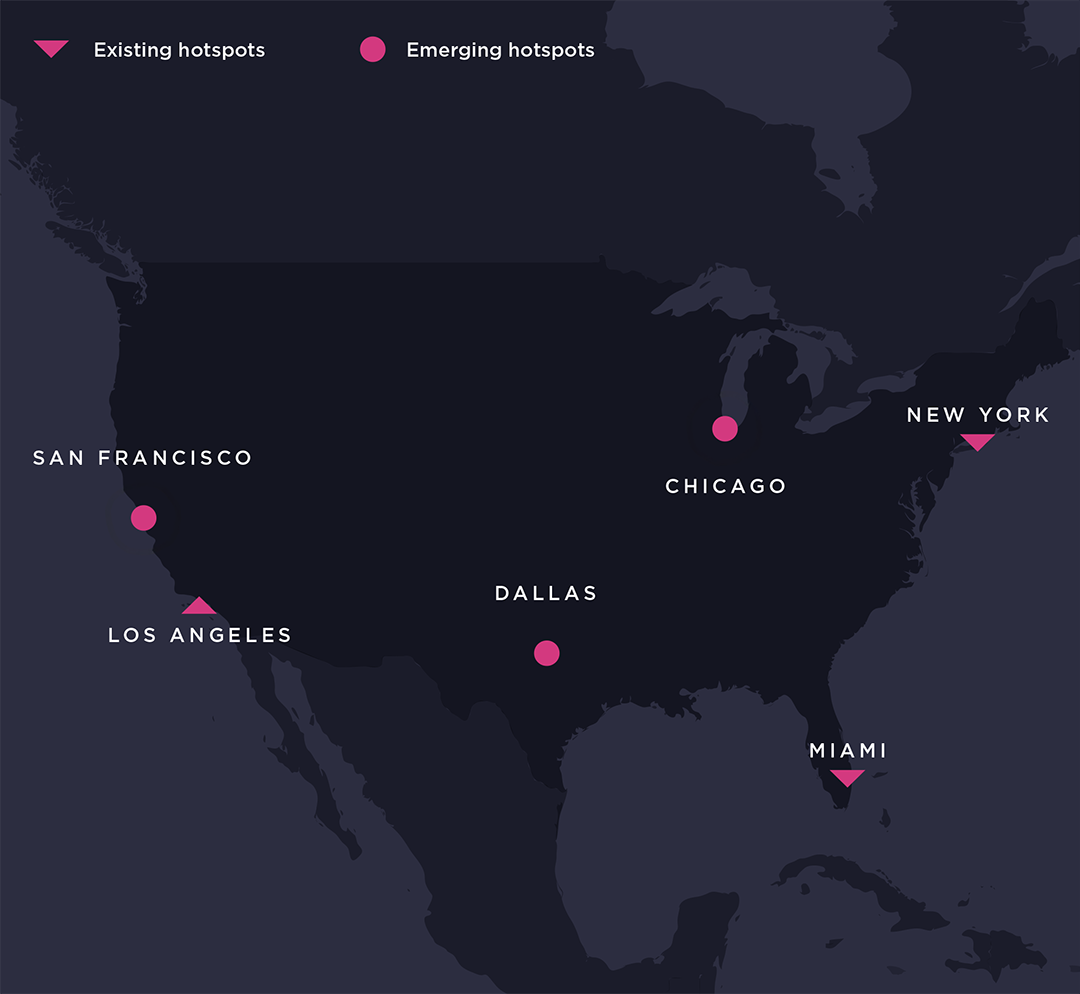
Beyond the big three
While New York, Los Angeles and Miami remain the foundation of any US luxury strategy, opportunity is no longer confined to the traditional map.

Boutiques to beach clubs:
Why are brands investing in resort retail?

For brands that means showing up wherever customers unwind, recharge and reconnect. Resort activations offer a chance to meet consumers in leisure mode, open to inspiration, primed to share and most receptive to experience. These settings allow brands to extend their identity beyond their flagship stores and into the rhythm of holiday life, with retail designed for the FOMO economy.

From branded beach clubs to curated hotel drops, these activations are designed to be rare, time‑limited and hyper-localised – tapping into the psychology of ‘blink and you’ll miss it’ and creating experiences customers want to post about, not just purchase from.

Seasonal activations also give brands a lower-risk opportunity to trial new markets, explore format innovation and build awareness among international audiences. Initially dominated by the megabrands, a rising wave of cult, creative and accessible brands have also embraced resort retail, turning this from a luxury flex into a movement reshaping the retail calendar.

Over 80% of brands enquiring for pop-up activations were focused on short-term, resort-based leasing opportunities – showcasing the strategic significance of seasonal activations.

Savills Retail
Resort retail has shifted from a seasonal flourish to a core part of brand strategy. The right location doesn’t just provide a sales opportunity, it places a brand directly in the lifestyle moments their customers aspire to. When done well, it expands reach, attracts new audiences, and cements the brand in the memories and rituals that matter most to their customers.
Alexa Choynowski
Central London and global cross border retail
Seasonal activations have moved from a marketing experiment to a mainstream retail strategy. We’re seeing more brands ask not if they should be in resort locations, but which destinations will deliver the right blend of audience, spend and cultural cachet. For those that get it right, the return isn’t just in sales, it’s in positioning the brand at the centre of where their customers live their most aspirational lives.
Sam Foyle
Co-head of prime global retail
Retail x Hospitality:

Brands are also immersing themselves within the guest experience, no longer just popping-up at hotels but instead, turning iconic locations into extensions of their brand world.

From curated capsule collections at St. Regis to pyjama soirees at The Carlyle, these partnerships are conceived as immersive activations that leverage the DNA of both brand and hotel.

Brands landing at a place like Hotel du Cap‑Eden‑Roc, Le Bristol Paris or The Colony Hotel are seeking presence with purpose, while for hotels, these collaborations can deliver an elevated guest journey, rich in aesthetics, storytelling, and surprise. For brands, they provide an opportunity to create cultural relevance for a pre-qualified audience against a ready-made backdrop for seasonal expression, designed to be photographed, shared and rebooked, whether a poolside umbrella or in‑suite raffia bag.

Critically, these collaborations are intended to unlock engagement touchpoints with a highly receptive audience of affluent travellers in a leisure mindset, primed to spend and connect. Whether a pop-up, trunk show or an invite-only cocktail party with shoppable exclusives, the blend of commerce and community makes the brand feel lived beyond the confines of the store.

The power of collaboration
HOTEL AND RESORTS
STAUD AT ST. REGIS
Staud’s first luxury hospitality collaboration brought its West Coast ease to St. Regis’ global portfolio of iconic resorts. The exclusive collection fused Staud’s playful, fashion-forward aesthetic with the brand heritage of St. Regis – channelling a sense of adventure, indulgence and style designed for the worlds most coveted destinations.
Antibes
Sporty & Rich at Hotel du Cap‑Eden‑Roc
A synergy of California cool and Riviera elegance, this collaboration saw a summer capsule infused with hotel heritage, including crested swimwear and terrycloth polos.
Portugal
Ulla Johnson at Quinta da Comporta
The designer’s exclusive resort capsule was showcased within the resort’s wellness space, creating an aligned experience around relaxation and understated luxury.
St. Tropez
Restoration Hardware at Sea
Retail takes to the water. Savills client Restoration Hardware launched a 130-foot yacht turned floating showroom and hospitality space, offering curated brand experiences with Mediterranean flair.
Seasonal retail:
More than a summer fling

Resort retail has enabled strategic extensions of physical retail, flexing with the rhythm of the customer and for many brands has become part of their annual strategies, returning season after season to re-engage their audiences in lifestyle settings.

Complementing city flagships, these activations and strategies can expand the definition of brand experience to engage differently: more relaxed, more human, more aligned with how consumers live, travel and spend. Because while flagship stores still matter greatly, some of the most magnetic brand moments happen poolside – with a spritz in hand.

Indeed, in an age of sameness, the real flex is unforgettable experiences. Not just stores, but settings. Not just products, but presence. Because no logo beats the memory of a perfectly pitched brand moment under Mediterranean skies.

And as summer fades once again, one question remains: which brands will swap beach clubs for après-ski when the snow starts to fall?
TODD SIEGEL

todd.seigel@savills.com

+1 312 595 2930

Recommended reading
Why resort retail is heating up

This summer has seen brands take to resorts to create immersive, seasonal experience that connect with consumers in leisure mode. Discover the strategy that for many is more than just a summer fling.